
Imaging Solutions
Anisotropic Prestack Depth Migration
Our anisotropic prestack depth migration services provide accurate depth imaging for complex land seismic data, improving the positioning and focusing of reflectors in structurally challenging environments.
Technical Context
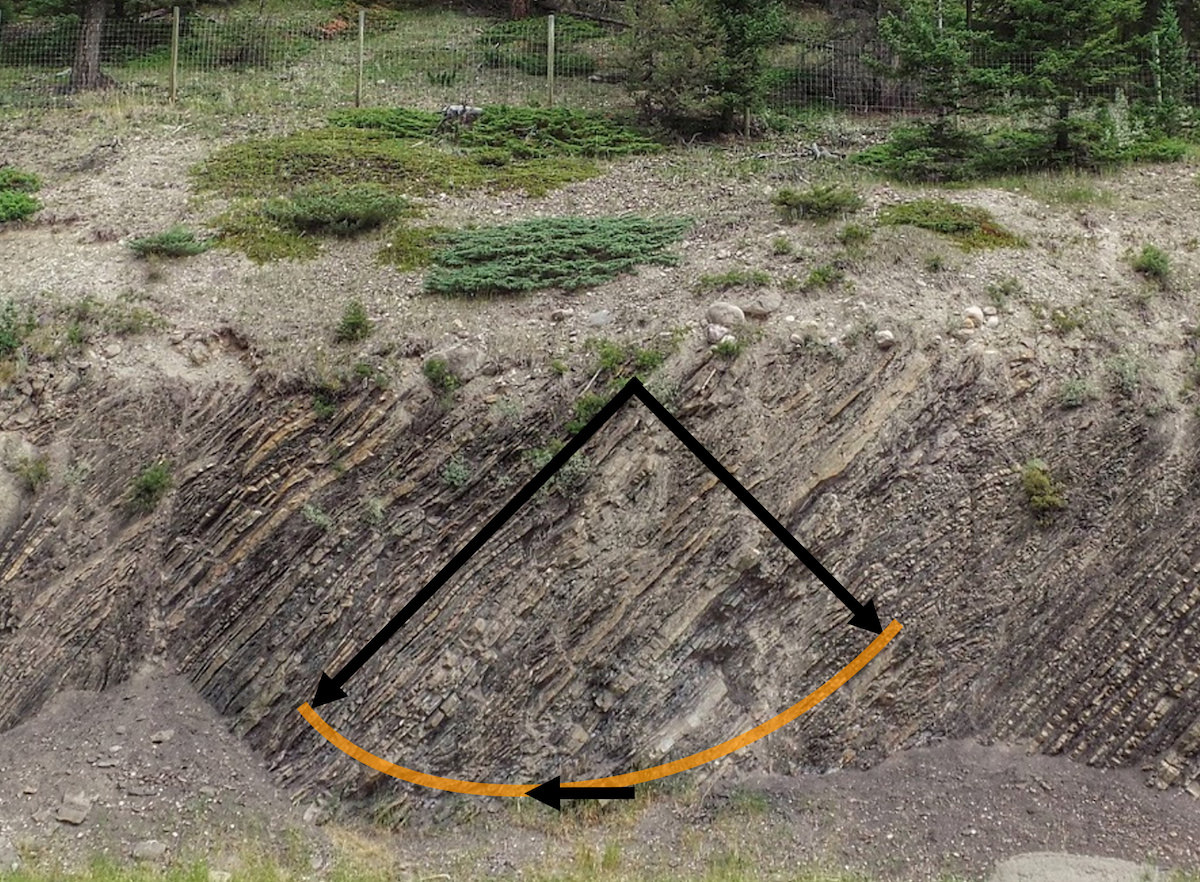
Where the data is robust enough to support the process, anisotropic depth migration offers the most accurate depths and lateral position of imaged reflectors. Thrust-belt seismic data typically has dipping anisotropic clastic rocks above the target reflector, which creates a TTI imaging problem. The TTI anisotropy effect alone can result in hundreds of metres of lateral position error on the seismic image of subsurface structures. The lateral-velocity changes that result from the presence of a large faulted block above the target will also result in lateral-position changes of the imaged structure which may be in the same or opposite direction as the anisotropy position error. We can minimize structural uncertainty with TTI PSDM, which corrects for both raybending caused by velocity heterogeneity and wavefront sideslip caused by seismic anisotropy.
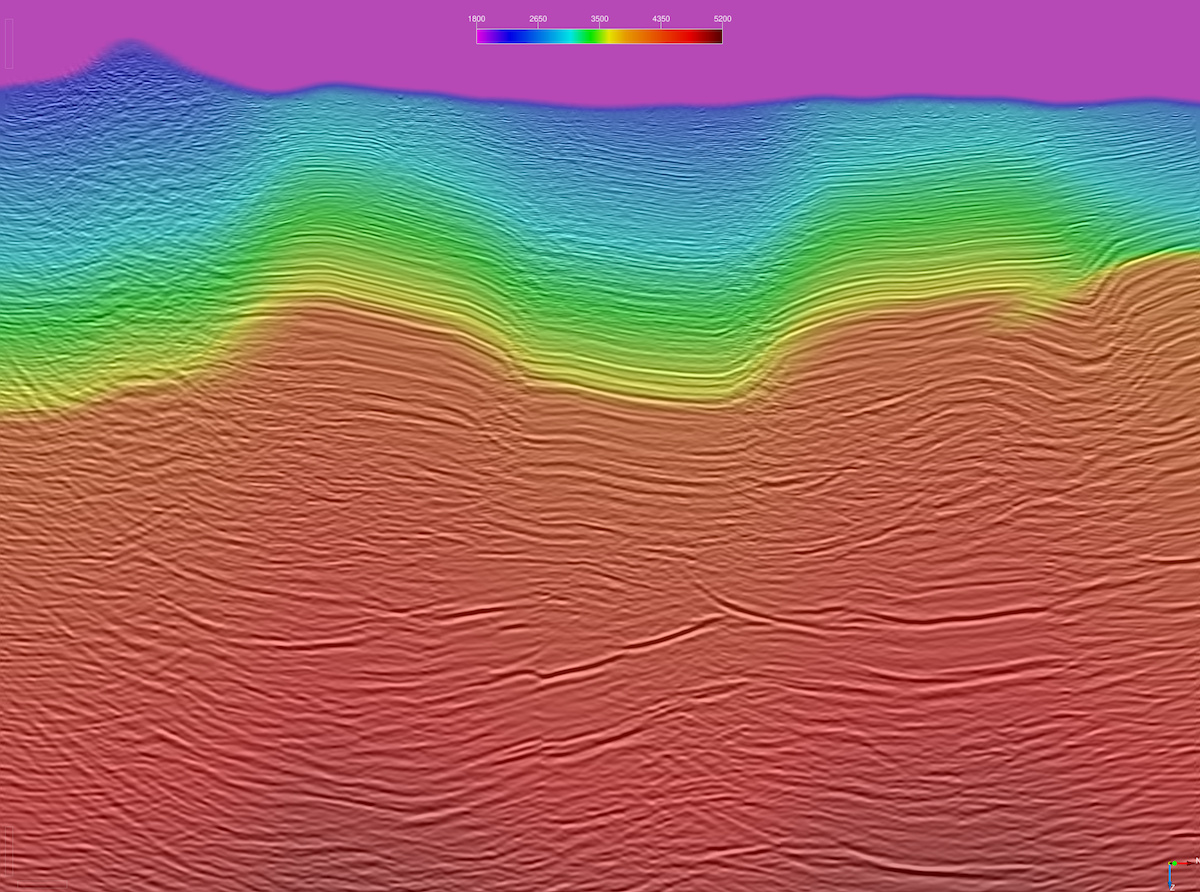
- Initial depth velocity model and corresponding PSDM stack
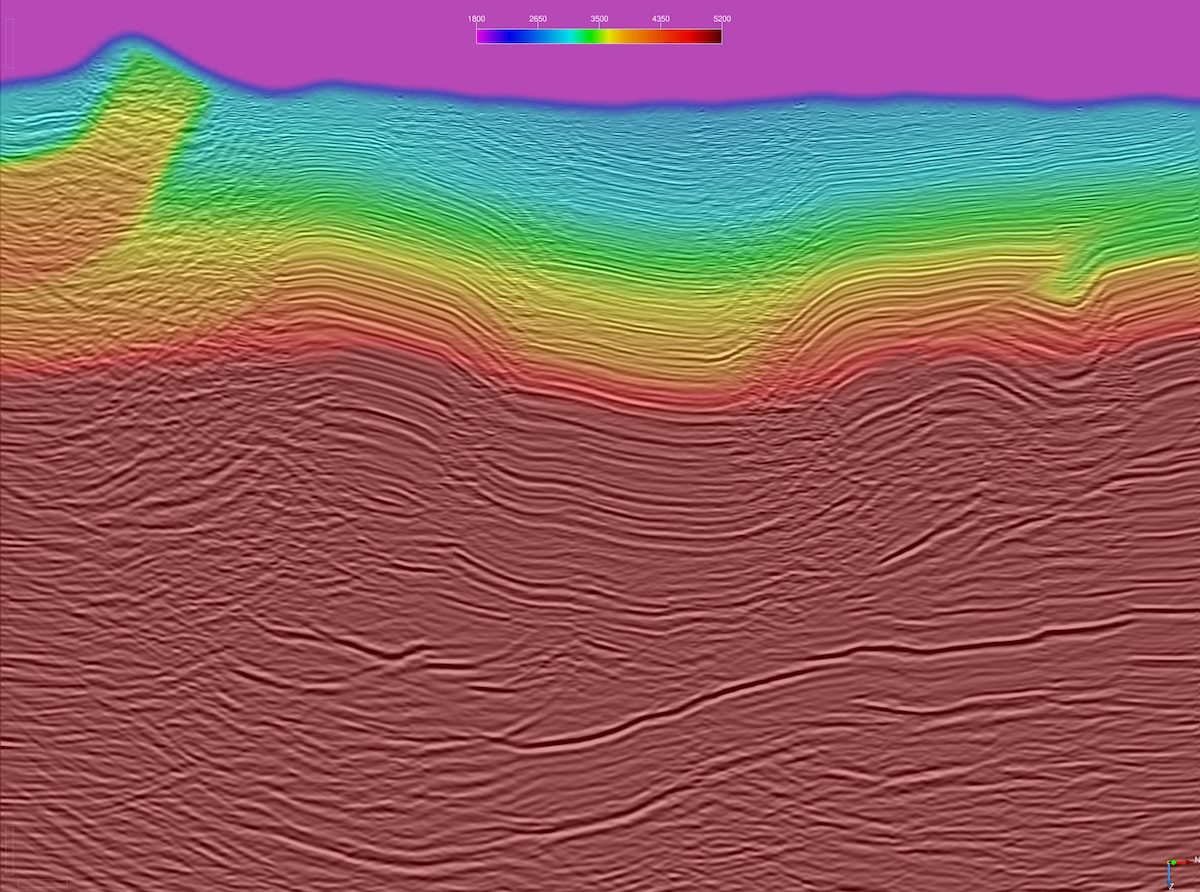
- Final depth velocity model and PSDM stack after multiple model update iterations, showing increased velocity model detail and improved imaging result
Algorithm & modelling philosophy
We primarily use a Kirchhoff algorithm because it allows us to calculate anisotropic traveltimes from exact source and receiver elevations in rough terrain. Taking an interpretive approach to model building, the fast turnaround of our highly optimized anisotropic depth migration algorithm allows us to experiment with a variety of velocity-model interpretations in our quest for an optimum imaging solution.
Kirchhoff anisotropic (TTI) depth migration workflow
Initial velocity model from PSTM interpretation
Incorporate Epsilon & Delta (anisotropic parameters)
Define dip field (logs + geological input)
Update velocity model (iterative optimization)
Maximize gather flatness / minimize well-top error
Final Prestack anisotropic depth migration