
Technology
Advanced Algorithms
Proprietary imaging and velocity model building technologies for complex land data
Enhancing imaging through advanced algorithms
TBI has developed a proprietary suite of advanced seismic imaging algorithms and model building technologies to enhance imaging of structured land data. These technologies complement our well-established geologically constrained model building workflow by adding detail to velocity models and improving the resolution of the resulting images.
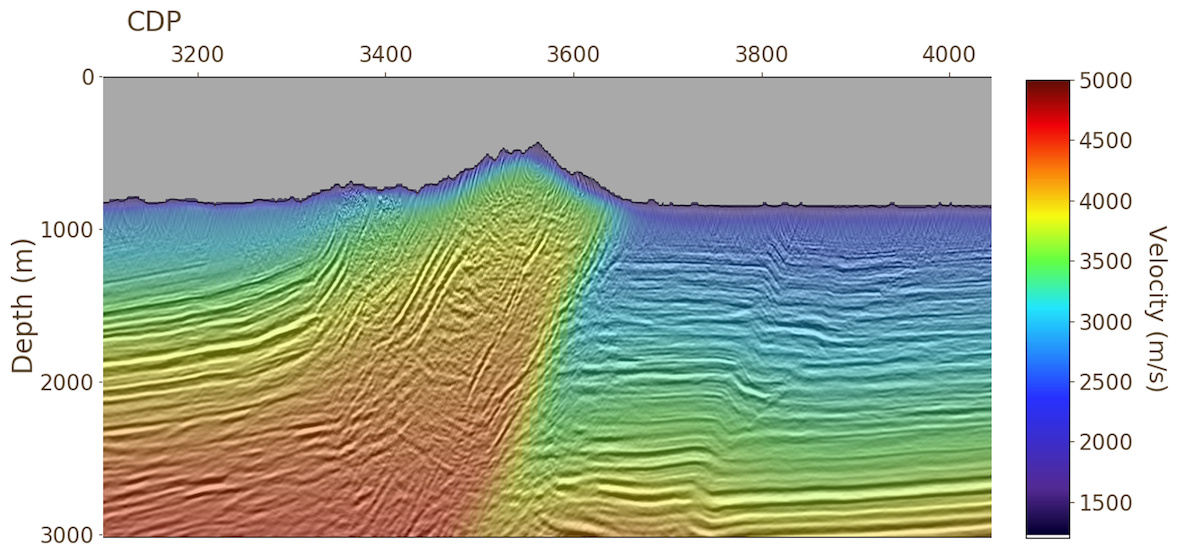
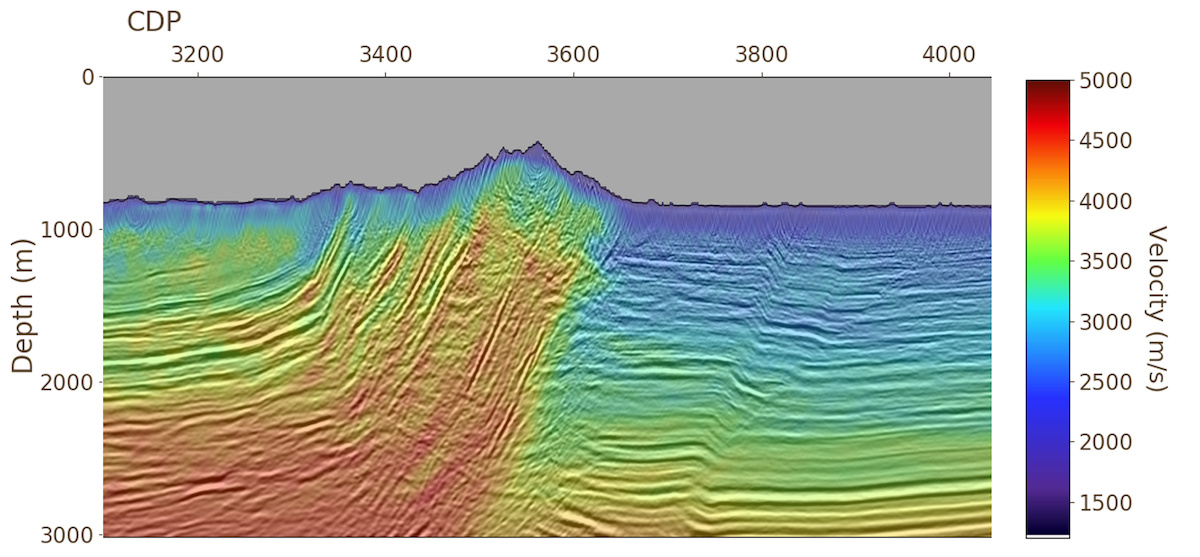
Comparison of initial model vs 10 iterations of FWI. Note the improvement in reflector continuity around the major thrust fault at CDP 3600. The subtle changes in velocity around the small throw faults at CDP 3800 add clarity to the image.
Technology that improves results
TBI has developed a proprietary suite of advanced imaging and model building algorithms to enhance imaging of structured land data. These technologies are used to add detail to velocity models and improve the resolution of the resulting images.
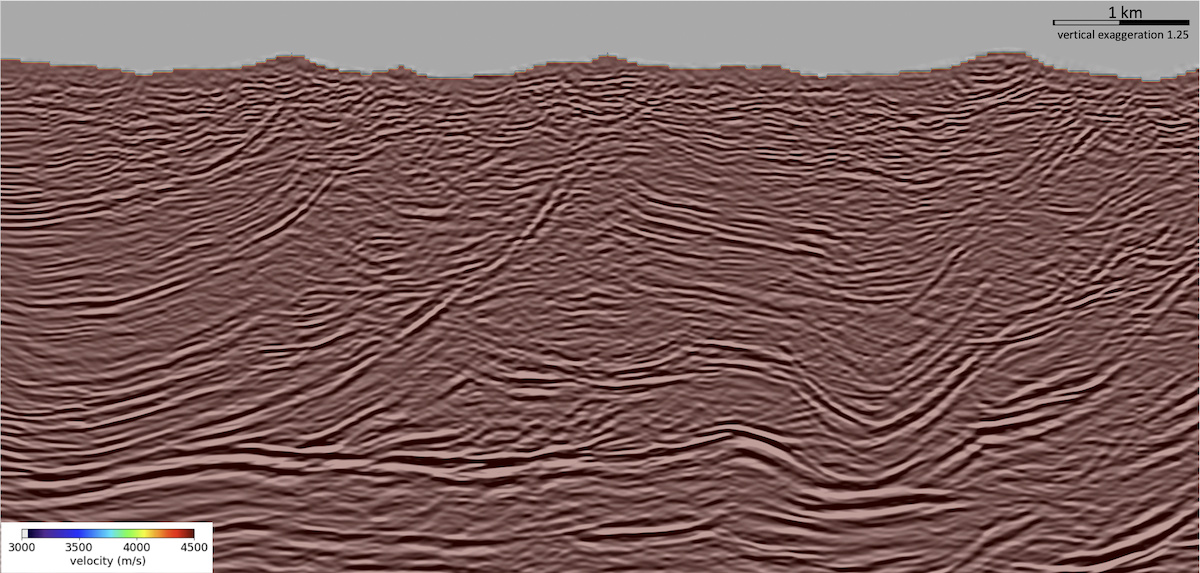
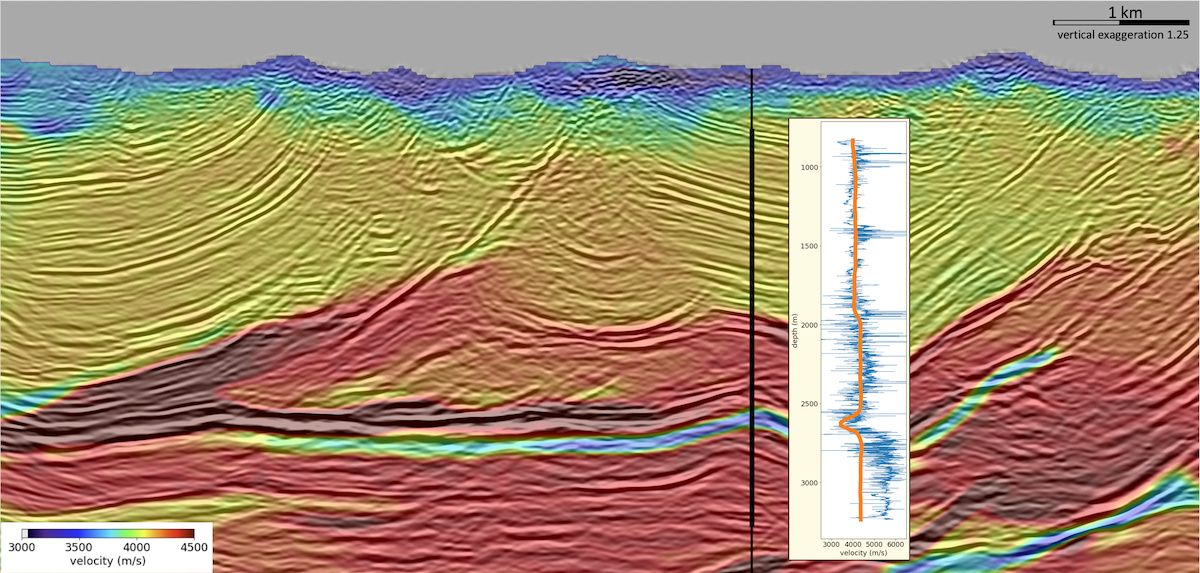
Comparison between the imaging using an initial constant velocity model of 4500 m/s and the velocity model after 10 iterations of CNN model building. The CNN predicts a realistic low-velocity weathering layer and accurate subsurface velocities. Comparison of the model to the sonic velocities of a nearby well shows a strong correlation.
Core advanced technologies
FWI – Full Waveform Inversion
Our Full Waveform Inversion method was built from the ground up to handle the unique challenges of structured land data.
CNN – Convolutional Neural Network
Our Convolutional Neural Network velocity model building algorithm uses targeted training data predict accurate velocity models in the most challenging environments.
RTM – Reverse Time Migration
Our Reverse Time Migration algorithm handles rough topography and complex velocity models to produce accurate, high resolution seismic images.