
Depth Imaging Services
Interpretive Velocity Modelling
Geologically-constrained velocity model construction for complex thrust-belt environments.
Depth migration in structurally complex settings
Depth migration in thrust-belt environments requires an interpretive approach to building a depth-migration velocity model. With low fold in the near surface, low signal-to-noise ratios on the image gathers, and complex horizon geometries, automated velocity-model-building tools often fail to produce an optimal velocity model for TTI anisotropic depth migration. In a setting with such under-constrained velocities, we must use as many geologic constraints as possible in the interpretation of our velocity model. This forms the basis of our Geologically-Constrained Model Building Solution.
Geologically-constrained model building workflow
Building these velocity models involves close collaboration with the interpretation team. We have software to efficiently build the models and migration algorithms that produce sharp images, but it is the local domain-knowledge that allows us to converge to a geologically accurate velocity model. We further evaluate the accuracy of the model using well calibration and seismic diagnostics such as image gather flatness, reflection continuity and fault sharpness.
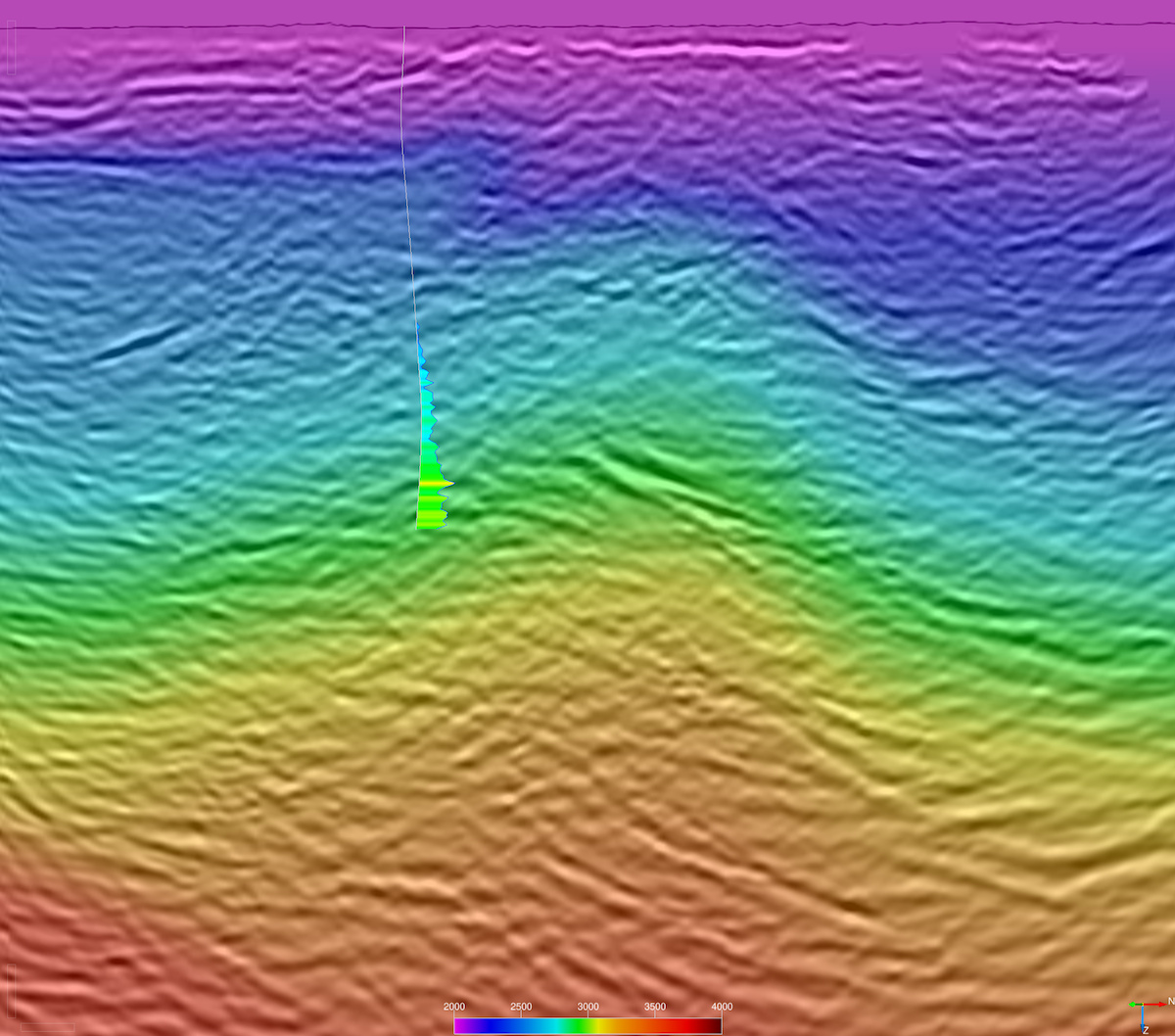
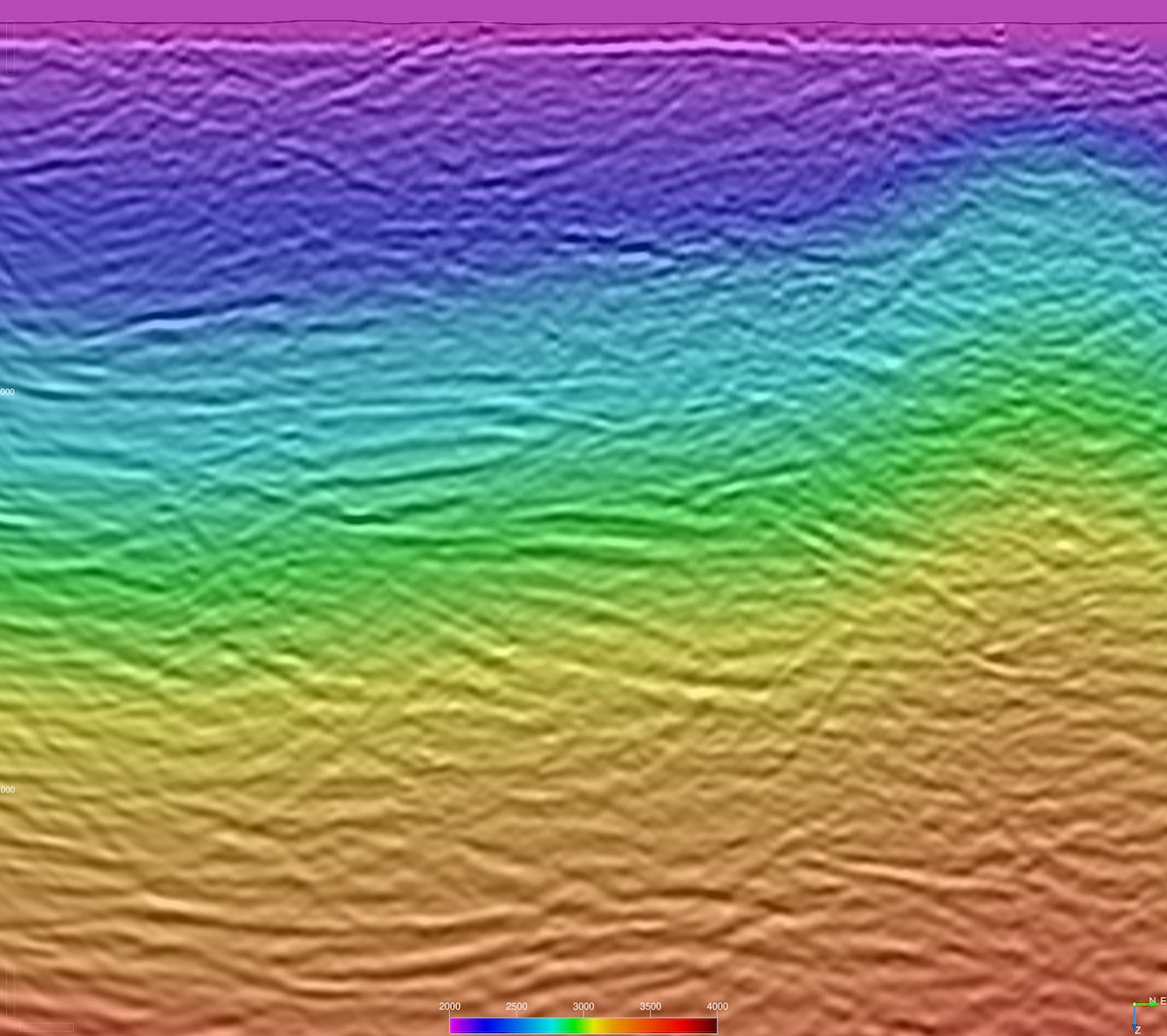
- A preliminary PSDM stack with velocity model overlay
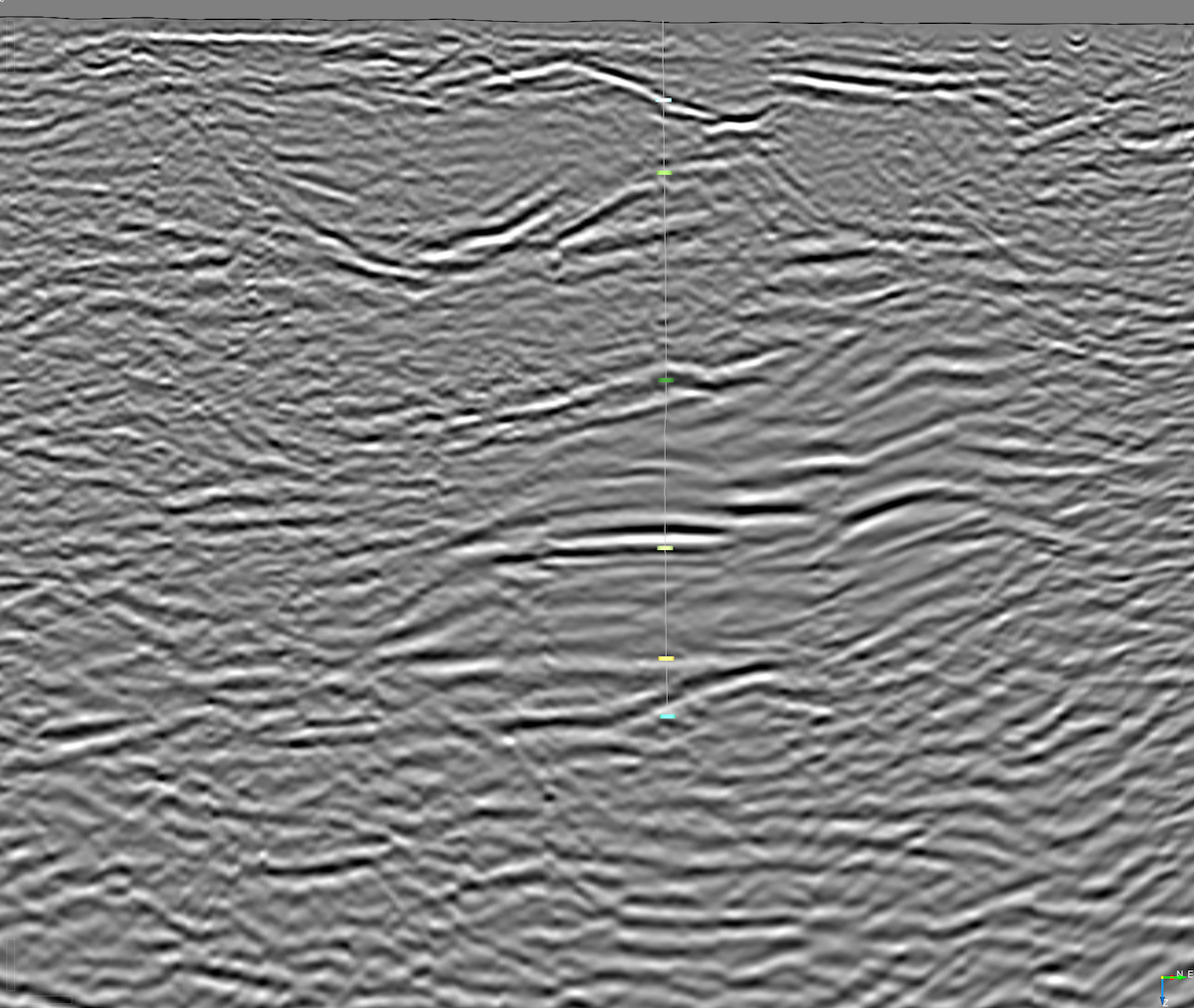
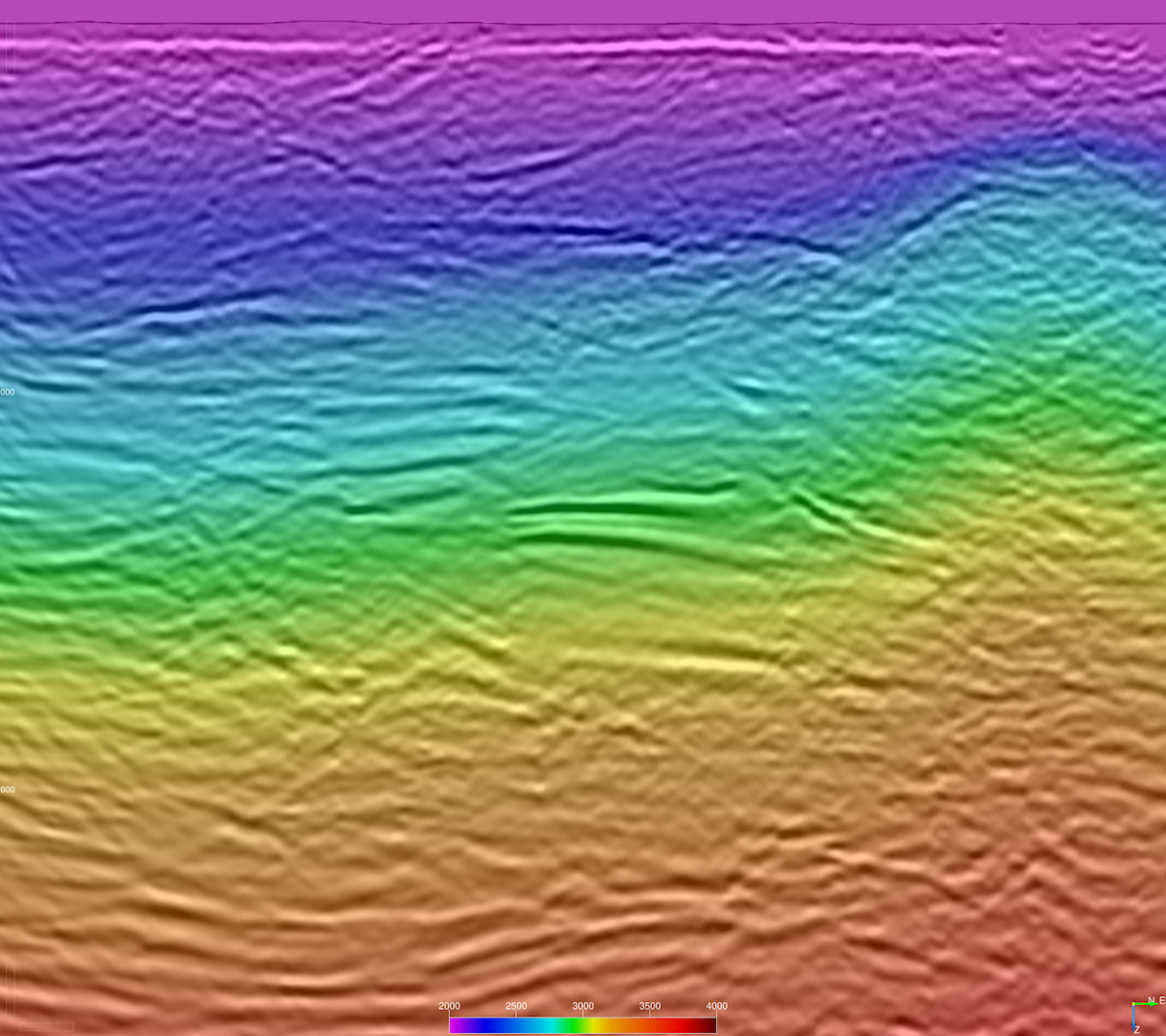
- A final PSDM stack with velocity model, showing improved reflector sharpness and coherency