Advanced Algoritms
CNN – Convolutional Neural Network for Velocity Model Building
CNN velocity model building uses convolutional neural networks to enhance the resolution of seismic velocity models in complex land environments. At TBI, this data-driven approach complements interpretive and geologically constrained model building workflows where data quality supports its application.
Challenges in velocity model building for complex land data
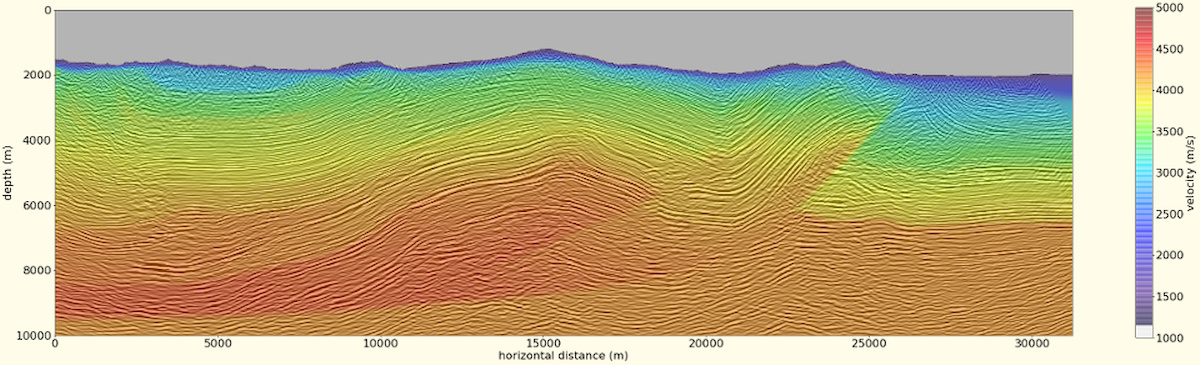
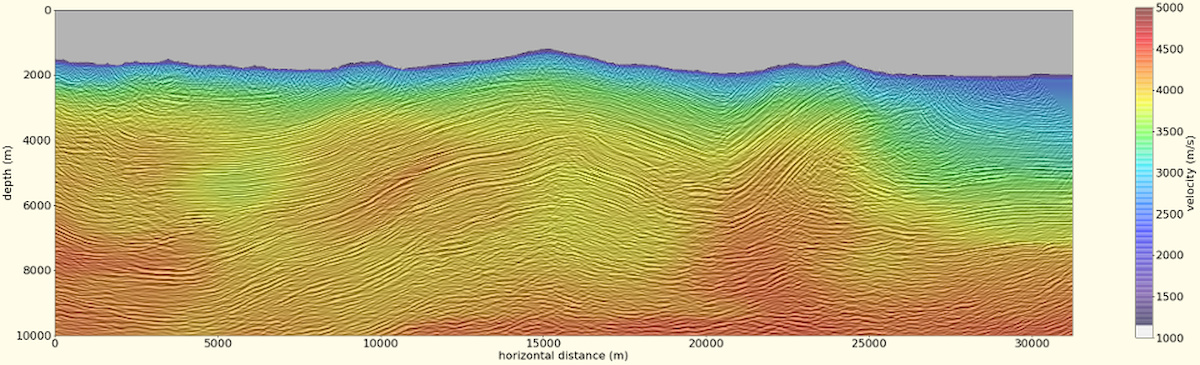
Complex-structure land data is often characterized by low signal quality, poor bandwidth, and large wavelet variation. This makes it difficult to build accurate velocity models, especially in areas with limited geologic constraints. To tackle this issue, Thrust Belt Imaging has developed a novel method using convolutional neural networks (CNNs). This iterative, image-domain velocity model building tool combines our decades of experience building velocity models and the predictive power of deep learning. It takes two inputs, migrated CDP gathers and velocity model, and predicts a more accurate velocity model.

Image-domain velocity model prediction using CNN
- Migrated CDP gathers
- Velocity model
- CNN predicts a more accurate velocity model
Training the CNN with synthetic and geological data
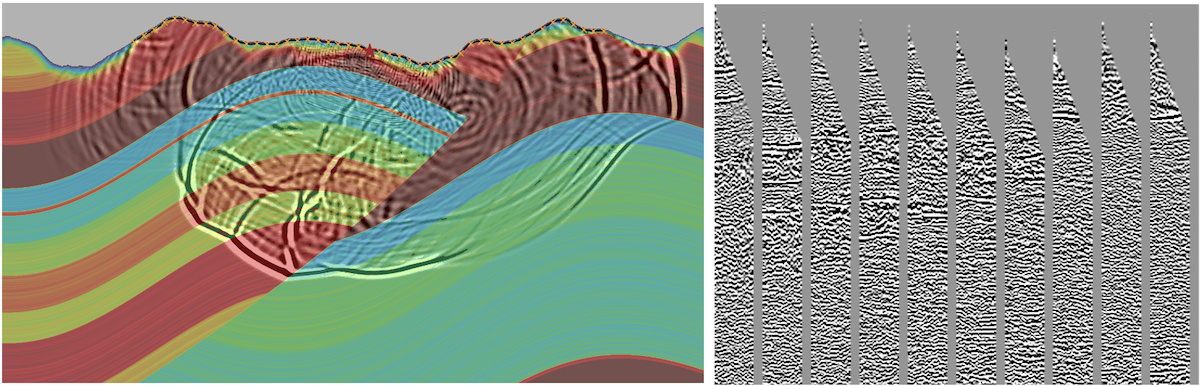
Before the CNN can predict velocity models on field data, it must be trained to learn the relationship between the inputs and output. This is achieved by training the CNN on many synthetic examples. We used our experience from fold-and-thrust belts around the world to design training data that are representative of the data we encounter in the field. We can supplement this training data with examples of your geology, providing a CNN tailored to your specific imaging challenges.

Uncertainty estimation and model reliability
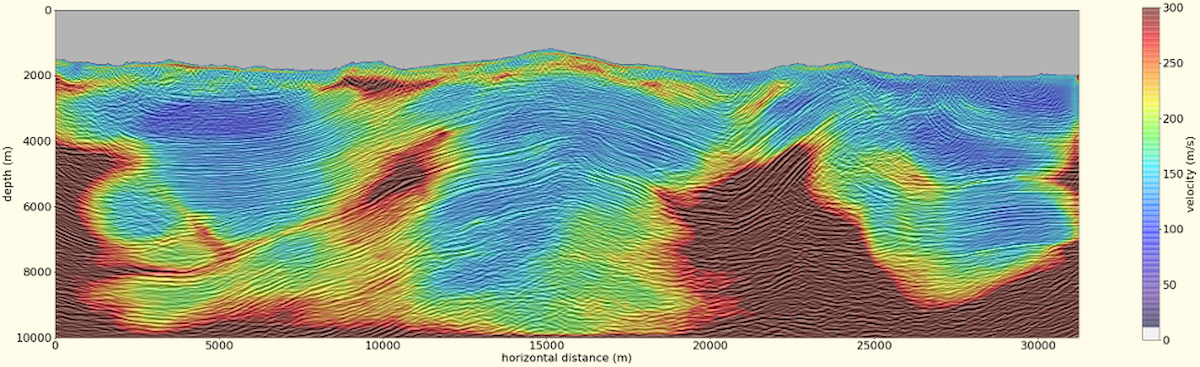
In addition to a predicted velocity field, the CNN also produces an uncertainty field, which shows where the CNN is confident in its prediction. We use this to decide where to trust the model and where to use another model building method, such as geologically-constrained velocity model building or FWI.
CNN within the CLIMB Framework
This is the basis of our CLIMB workflow, where we combine different model building approaches to deliver the optimal velocity model and sharpest seismic image.