Solutions
Weathering Solutions
Near-surface modeling and correction for accurate time and depth imaging
Near-surface effects in seismic imaging
The near surface is the lens through which we image subsurface structures with seismic data. Our seismic weathering solutions improve the accuracy of near-surface corrections, resulting in more accurate seismic imaging. From the past decades until today, we dedicate considerable effort and attention to managing near-surface effects in our seismic data. We at TBI continually optimize our workflow and algorithms with a range of industry-standard techniques supplemented with our own proprietary developments in algorithms and workflows. Production processing receives the same dedication as our development efforts, where we adapt our weathering solution to each dataset, depending on which algorithm and workflow produces the best result for each particular geologic setting.

Weathering solutions for time and depth domains
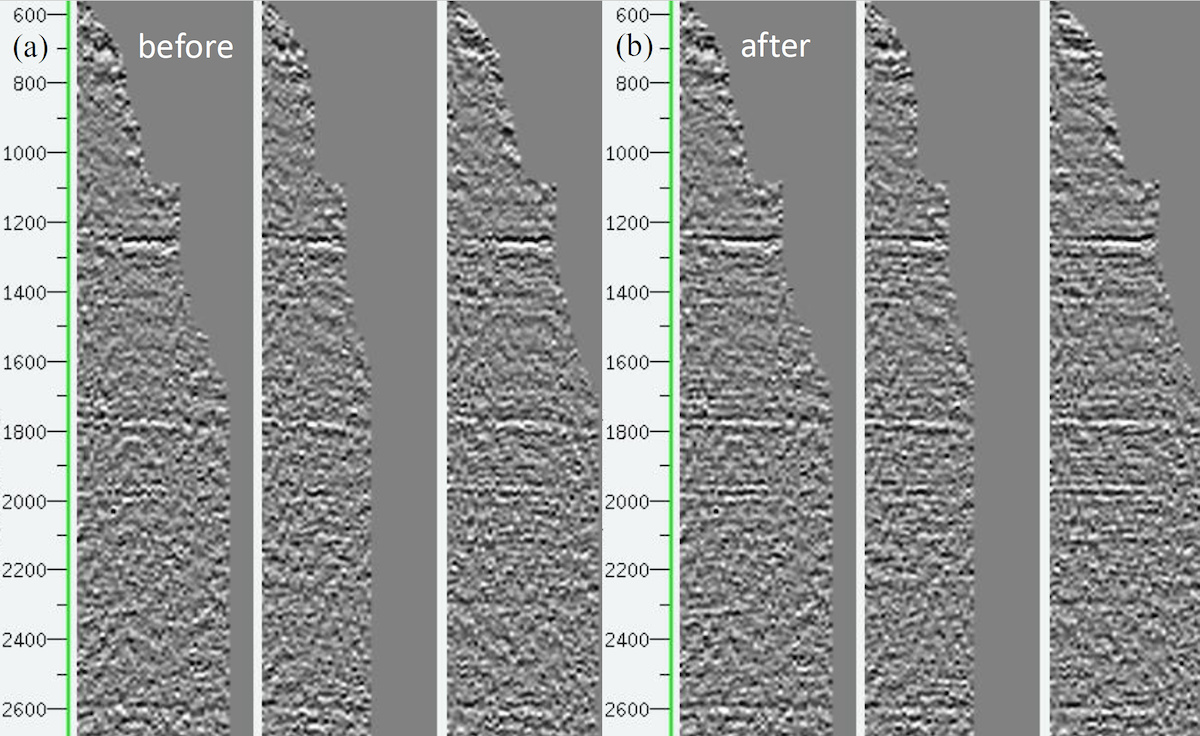
We have two separate workflows that we adapt to each dataset. For the time processing, we have the time weathering solution (TWS), which optimizes the weathering correction for time processing and subsequent prestack time migration (PSTM). In depth imaging, we have an opportunity to more accurately correct for near-surface weathering effects, especially in areas where we have high velocities near the surface, like when high-velocity outcrops at surface. The depth weathering solution (DWS), uses near-surface velocities for raytracing through a complex weathering layer and reflection statics coupled to the raytracing used in prestack depth migration (PSDM).
Near-surface velocity estimation and static corrections
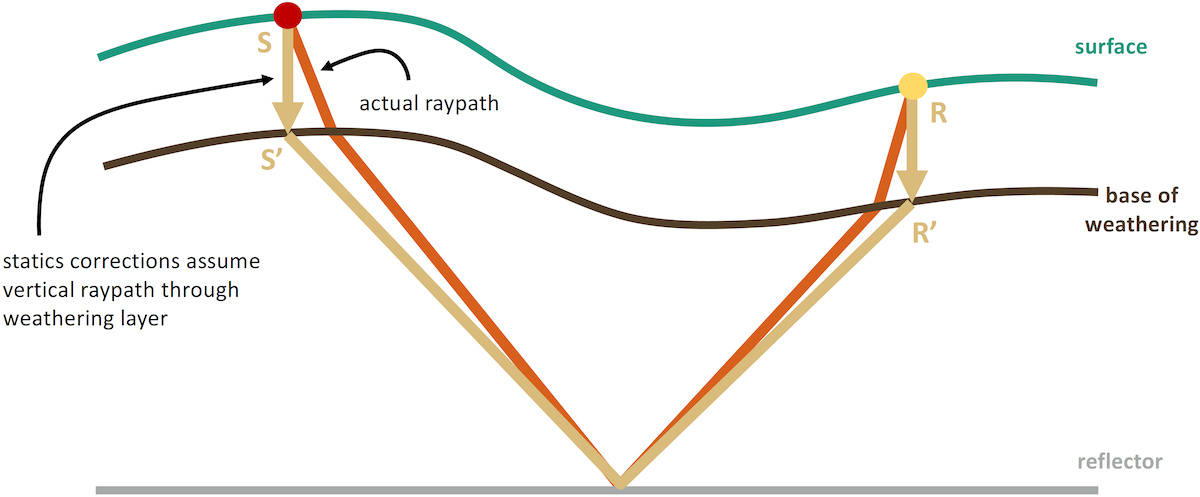
Some information about the near-surface velocities comes from the first-arrival events on the shot gathers (left). In time processing, we use these near-surface velocities to calculate time delays across the weathering layer. The standard process is to calculate static shifts for the seismic traces to correct for these time delays. Static corrections assume that the raypaths through the weathering layer are vertical (right)—reasonable when the weathering velocity is low.